Motivation rarely goes away on its own. What changes is the context around exercise. Life gets fuller, recovery takes longer, and activities that used to feel automatic can start to feel like work.
None of that means you are done, though. It means you need a slightly different approach than the one you used at 30.
Shift the goal from performance to consistency
Consistency beats intensity every time for long-term runners. A 20-minute run three times a week, done reliably for a year, builds more than a punishing training block followed by two months off.
According to the American College of Sports Medicine, older adults need roughly 150 minutes of moderate aerobic activity per week. That breaks down to about 30 minutes, five days a week, or three longer outings. The number is more approachable than it sounds.
Set the smallest version of the goal you are actually willing to do. Ten minutes is a real run. Showing up matters more than the distance.
A short run you actually do is worth more than the long one you kept planning.
Make the habit hard to skip
Habits stick when they cost nothing to start. Lay out your shoes the night before. Schedule runs the way you would a meeting. Pair the first few minutes with something you like, a podcast, a familiar route, a coffee reward after.
When you build your running back up after 50, the entry barrier matters as much as the plan itself. If getting out the door feels like a production, you will skip it. If it feels automatic, you will not.
One useful trick: commit to just the first five minutes. Once you are moving, you will almost always finish.
Run with someone
Running with another person is one of the most reliable consistency tools there is. You are far less likely to bail when someone else is expecting you.
Local running clubs often have groups at a range of paces and distances, and many skew toward the 45-and-up crowd who run for enjoyment rather than competition. Walking groups count too. The social element turns a solitary discipline into something you look forward to.
The sense of belonging matters. Research on aging and exercise consistently finds that social connection is one of the strongest predictors of long-term physical activity in adults over 50.
Keep it enjoyable, not punishing
If every run feels like a slog, something needs to change, not your commitment. Running should have enough easy, enjoyable outings mixed in that it feels like a habit worth keeping.
Easy runs, the kind where you can hold a full conversation, serve a real purpose. They build your base without wearing you down. They are also the runs that tend to feel good, and feeling good is what keeps people coming back.
A cool autumn morning, a familiar neighborhood loop, a flat trail in the park: the environment is part of the experience. Vary the route sometimes. Run somewhere you actually want to be.
Add strength work for two reasons
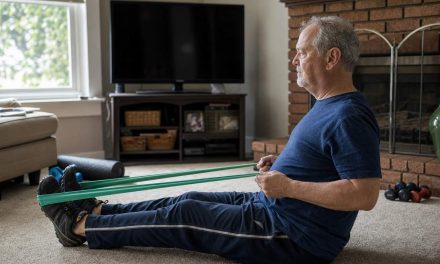
A little strength training makes running feel easier and lowers the chance of small injuries derailing your routine. That matters more as you get older, when a nagging ankle or sore knee is more likely to break a streak you have worked to build.
Strength work does not need to be complicated. Two short strength sessions a week targeting your legs, core, and feet are enough to support your running and protect your joints. It is also one of the better things you can do for bone density and balance as the years go on.
This is general information, not medical advice. If you have a specific injury or a health condition, check with your doctor before changing your routine.
Notice what you have already done
Tracking keeps momentum visible. A simple log, even a notebook where you note the date, distance, and how you felt, shows you a pattern of consistency that motivation alone cannot provide.
On days when running feels pointless, looking back at 30 logged sessions does something. It reminds you that this is a thing you do. That identity is easier to maintain than recreating motivation from scratch every week.
If you are working through the question of whether running is actually good for your body long-term, the short answer is that consistent, moderate running protects an aging body more than it harms it. That is worth knowing when doubt creeps in.
The plain version
Stay consistent and keep the effort enjoyable. Run with people when you can. Add a little strength work. Write down what you do. Lower the bar on the days it feels high.
Running at 55 or 65 is not the same as running at 30, but it does not need to be. The aim is to still be doing it in ten years, and the path there is simpler than it looks.