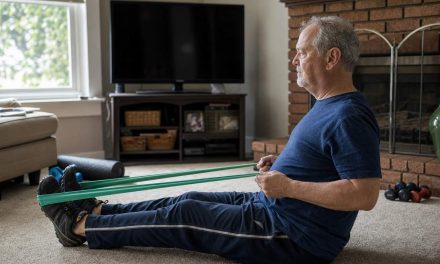
Ankles take a beating on every run, and most of us never train them directly. For runners over 45, that gap matters more than it used to. Foot and ankle strength is one of the quieter ways to stay running through the years without interruption.
This is general information, not medical advice. If you have ankle pain that doesn’t settle after a run, check with your doctor.
Why ankle strength matters more as you age
The muscles around the ankle and foot do two jobs at once. They absorb impact when your foot lands, and they propel you forward at push-off. When those muscles are weak, other structures, tendons, ligaments, the knee, pick up the slack. That is where overuse injuries creep in.
Research on older runners consistently points to reduced ankle stability as a factor in falls and soft-tissue injuries. Stronger ankles mean better proprioception, the body’s ability to sense where the foot is on uneven ground, which becomes more important every decade.
The fix is not complicated, and it does not require a gym.
Foot and ankle strength protects a runner more reliably than any shoe on the market.
Simple exercises to build it
These movements need no equipment beyond a wall or a step. Start with what you can do comfortably, add repetitions before you add difficulty.
Calf raises, both legs to one leg
Stand near a wall for support. Rise onto your toes slowly, lower just as slowly. Do 10 to 15 reps with both feet, then try it on one foot at a time. The single-leg version adds balance demand and strengthens the smaller stabilizing muscles that keep you steady on uneven ground.
Single-leg balance
Stand on one foot for 20 to 30 seconds. Eyes open to start, then progress to eyes closed when it feels easy. This builds the proprioceptive sense your ankle depends on when you hit a root or a crack in the pavement.
Toe and heel walks
Walk a short distance on your toes, then walk back on your heels. Thirty seconds of each is enough. These recruit the muscles along the top and bottom of the foot that often go untouched in normal training.
Eccentric calf lowers on a step
Stand with the balls of your feet on a step edge. Rise on two feet, then lower slowly on one. The slow lowering phase, called the eccentric phase, builds strength in the tendon and muscle that most running movements never fully train. Eccentric calf work like this is one of the most studied and most effective ways to keep the Achilles tendon healthy and resilient.
How to fit it in
Two or three short sessions a week is enough. Ten minutes tacked onto the end of an easy run or done on a rest day will build real strength over a few months.
Consistency matters more than volume. Five minutes done reliably beats a long session done twice a month.
Pairing ankle work with broader strength training for runners over 50 is a natural fit. The calf raises and single-leg work overlap directly, so you are not adding much time to a routine that already covers hips, legs, posture, and gentle mobility work like yoga.
A note on foot and form
Ankle strength and running mechanics are linked. When the ankle is stable and the foot strong, the stride tends to clean itself up: less overstriding, better push-off, lighter overall landing. If your running form has felt choppy or effortful, sometimes the limiting factor is ankle strength rather than technique itself.
Minimalist or lower-drop shoes can encourage the foot to work more actively, the way a minimalist running sandal does, but they are an option to ease into slowly over months, not a switch to flip overnight. For most people, the exercises above work regardless of what is on your feet.
Getting started
If ankle strength has not been part of your training before, the first few sessions will feel easier than expected. That is normal. Progress to single-leg versions and the eccentric step when the basics feel too simple, usually after two or three weeks.
These exercises are small, and the payoff is large. Runners who build steady ankle strength tend to miss fewer weeks to injury and hold their form later in a run. For anyone who wants to keep running for the long haul, that is exactly the kind of investment that compounds quietly over years.