Heat and humidity are the hardest weather a runner faces.
Not because they make running impossible. Because they quietly change the rules, and the body does not always warn you before it matters.
The good part is that a few simple adjustments handle most of it. Running in summer heat is about slowing down and respecting it, not toughing it out.
Why heat changes the equation
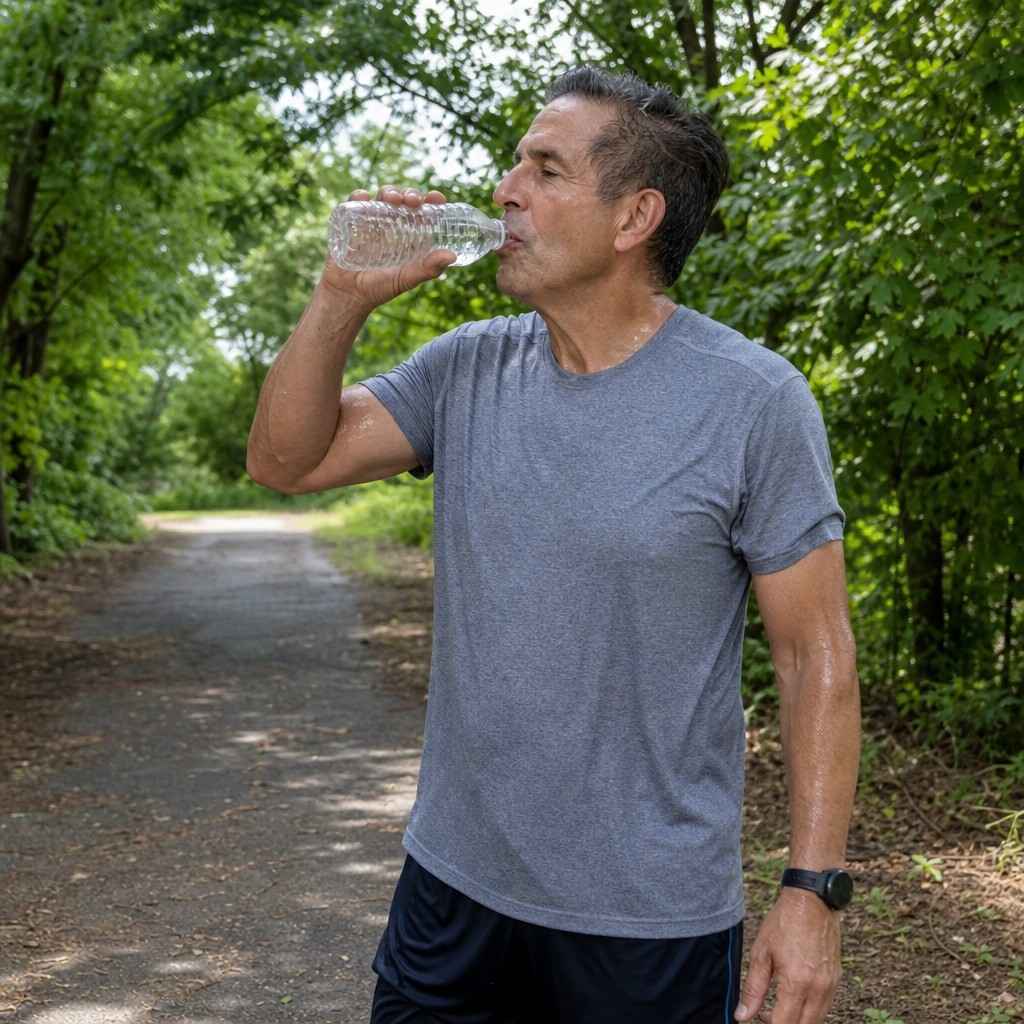
In the heat, your body does two jobs at once: power your muscles and cool itself down.
A big share of your blood volume gets sent to the skin to shed heat, which leaves less oxygen for the legs. Your heart works harder at the same pace.
Humidity makes it worse. In dry heat, sweat evaporates and pulls heat away. In humid air that evaporation slows down, the cooling system stalls, and your core temperature climbs faster than you realize.
Running in heat is not about toughening through it. It is about adjusting so the body can do its work.
This is a real safety issue. Heat exhaustion and heat stroke are genuine risks when you push pace in high heat.
This is general information, not medical advice. If you feel dizzy, confused, or stop sweating during a hot run, stop and get to a cool place immediately.
Slow down first
On a hot day, your effort is the number that matters, not your splits.
A pace that felt easy in April at 60 degrees will feel hard at 85 with humidity. That is the body working correctly, not failing.
Use perceived effort or heart rate as your guide. If your heart rate runs 10 to 15 beats higher than normal at the same pace, that is the heat load. Slow down until the effort feels right, even if the pace looks slow.
Runners who have been at it for years, including those who started later, find this easier once they let go of pace targets in summer.
Shift your timing and route

Early morning is the best window for summer running. Lower temperatures, easier humidity, and a sun angle that keeps the pavement cooler.
Late evening is second best. Midday and early afternoon are the worst, especially on asphalt that radiates heat long after the sun moves.
Route choice helps too, and knowing your best local running routes pays off here:
- Shaded trails and park paths cut radiant heat compared to open roads.
- Tree-lined neighborhoods stay cooler than open pavement.
- Avoid big paved areas like parking lots and wide streets in direct sun.
Hydrate before you go, not just during
Waiting until you are thirsty is already too late.
Start hydrated. Drink water in the hour before you head out.
During the run, take water every 15 to 20 minutes if the heat is significant. On anything above 45 minutes, an electrolyte drink or salt tablet replaces what sweat takes. Cramping during or after a hot run is often electrolyte loss, not just dehydration.
Chafing also gets worse when you sweat heavily. Anti-chafe balm on the usual spots before a humid run saves a lot of discomfort.
Dress for cooling, not just comfort
Light, moisture-wicking fabric does real work in the heat. Dark colors absorb radiant heat; lighter colors reflect it. Loose tops let a little air move across the skin.
A brimmed hat keeps the sun off your face. Sunglasses cut glare fatigue. Sunscreen matters on any skin exposed to daylight.
Keep it simple: the lighter the gear, the better when temperatures climb. Heavy or compressive kit holds heat against the body.
Listen to what your body is saying
Heart rate is one of the most honest signals you have in the heat. A watch with heart rate lets you see the load in real time. If your rate sits well above your normal easy pace, ease off rather than push through.
Pay attention to the back half of a hot run. Feeling strong at mile one and rough by mile three is not a pacing problem.
It is how heat accumulates. Plan for the second half, not just the start.
The reasonable question of whether running is bad for you as you age has a reassuring answer, and heat-smart running shows the principle: conditions and adjustment matter more than the activity itself.
What heat acclimatization does
Heading somewhere hotter and more humid than you train in? Expect an adjustment period.
The body adapts to heat over roughly 10 to 14 days of consistent exposure. Blood volume expands, sweating starts earlier and works better, and what felt brutal at the start of that window begins to feel manageable by the end.
Running shorter, easier efforts in the first week is not backing down. It is how the body gets there.